


Posidonia
Studies in Movement and Light
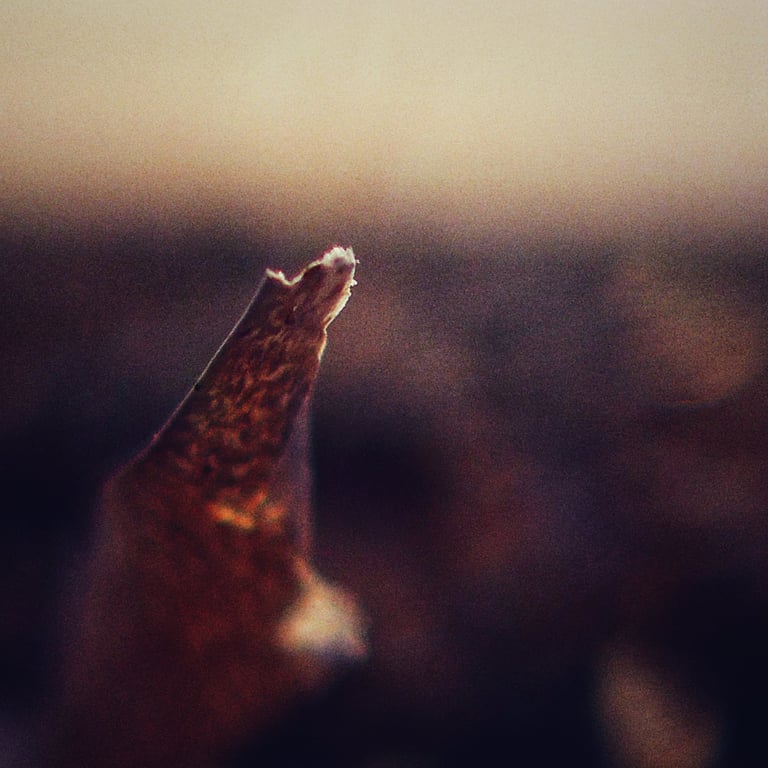
The photographic series on sea algae serves as a continuous reflection on the meeting point between the ephemeral and the enduring, acting as a starting point for aesthetic contemplation—a visual vocabulary for exploring themes of transience, fluidity, and the nature of tranquility itself.
Natural light in this series functions not merely as an illuminant, but as compositional architecture, structuring both the visual field and the emotional range of each image. Captured during the "golden hour"—that brief window when the sun is near the horizon and light becomes directional, warm, and photographically rich—the work remains remarkably restrained, avoiding the melodrama often associated with golden-hour photography.
Instead, the focus shifts to moments of maximum atmospheric diffusion: when coastal haze softens the sun's intensity or when the angle of light creates lateral illumination rather than direct overhead brightness. This results in a luminous quality that feels simultaneously present and veiled. The light does not impose—it diffuses.
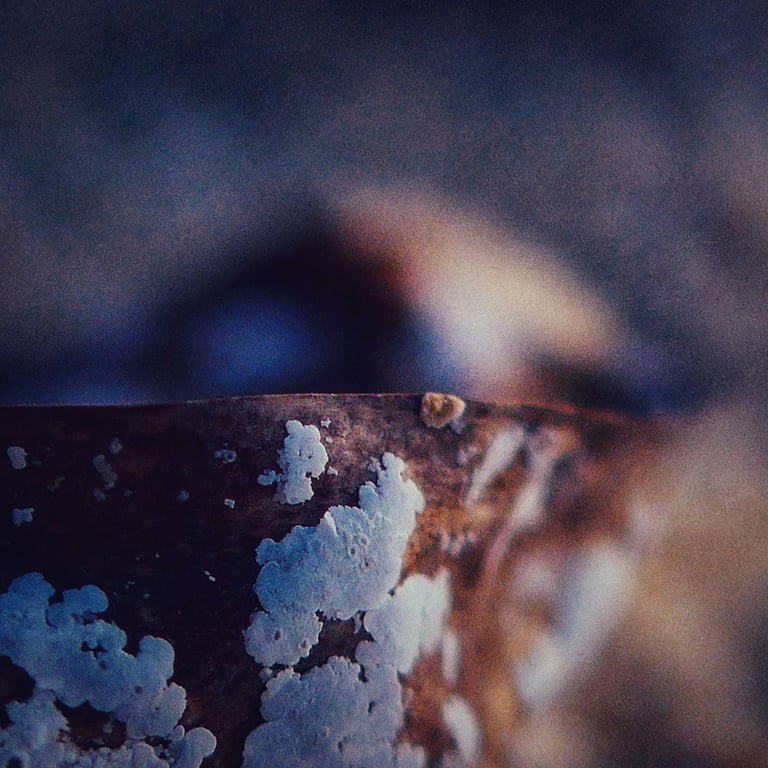
The chromatic implications are significant, featuring a palette that moves fluidly between cool and warm tones—from the deep cyan of water in shadow to the burnt siennas and purples of algae oxidizing in the air and light. The overall effect is a chromatic respiration, as if the images themselves are inhaling the cold and exhaling the warm.
The formal organization of these images reveals a deep understanding of how composition guides attention and generates meaning. Rather than a single central "heroic" specimen, the algae are often presented in groups, within fields of relationship.
The eye moves from the crystalline detail of filaments in focus toward the more impressionistic rendering of the background. Particular attention is paid to the point where the algae meet the sand. These are boundary moments—the threshold between mobility and stasis, the organic and the inorganic, the living and the inert.
This is photography as psychological projection—an honest admission that we always view the world through the lens of our own needs and desires. The serenity in these images reflects a need for visual silence, existing "more inside than outside." It is a kind of mirror that does not merely reflect what is there, but reveals what we bring to our encounters with the natural world. This is nature photography that does not pretend to be neutral observation, but acknowledges the formative power of the human desire for beauty, pattern, and peace. The image reveals itself slowly to those willing to look with the right quality of attention, at the right moment, and with the necessary patience.
I